
Approvals and the environmental review
This plant cannot be built or operated without passing the government's environmental review and receiving its approvals. Here is where that process stands, how you can take part, the alternatives we weighed, and the impacts and how we manage them.
GHD is leading our Environmental Impact Assessment
Circula has appointed GHD Philippines to carry out the project's Environmental Impact Assessment (EIA). GHD is a global leader among environmental firms, ranked #31 in ENR's 2025 Top 200 Environmental Firms.
Visit GHD Philippines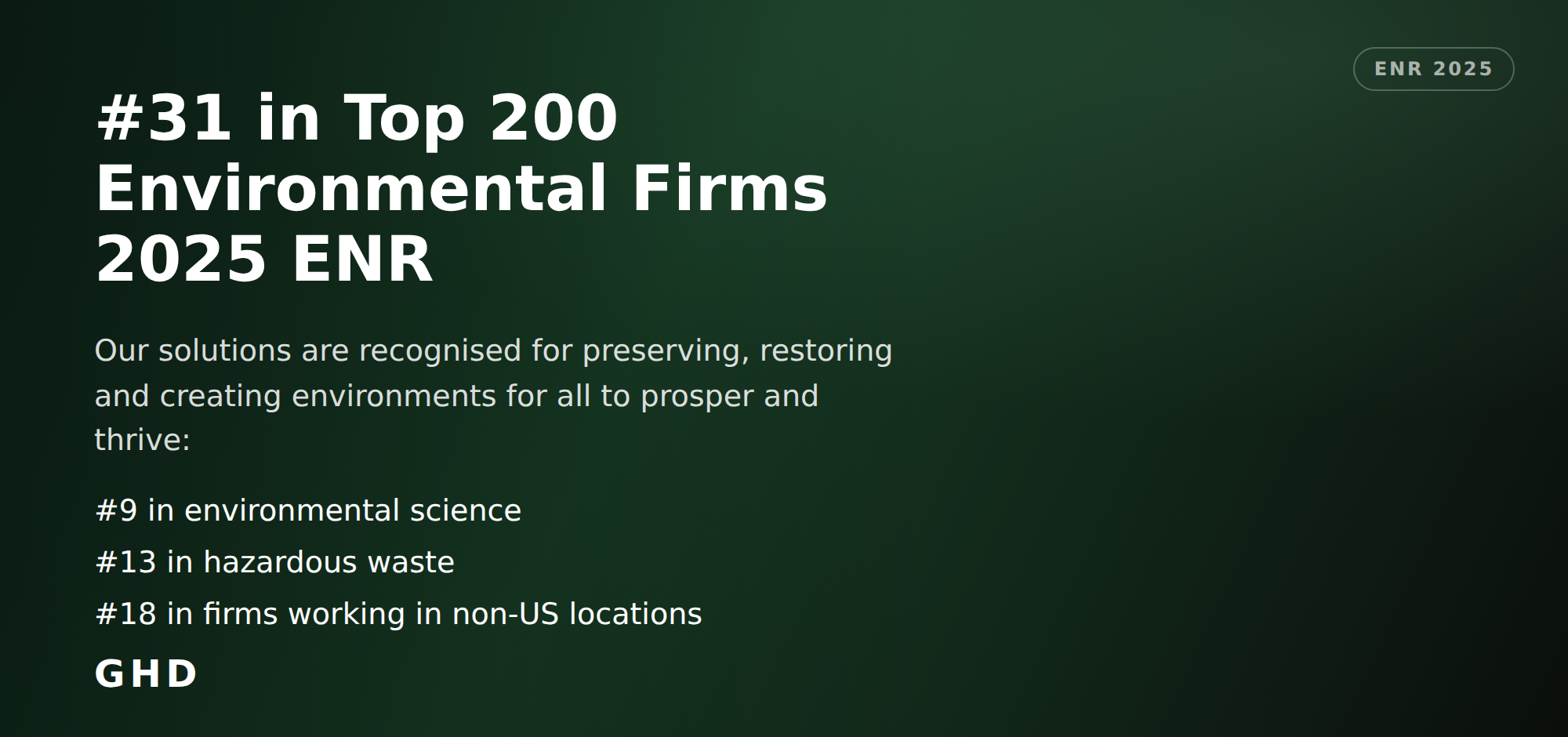
An independent environmental review is underway
Before this plant can be built, it must first pass a full Environmental Impact Assessment (EIA), reviewed by the government's Environmental Management Bureau (DENR-EMB). This is a legal requirement, and the plant cannot operate until that review is complete and an Environmental Compliance Certificate (ECC) has been issued.
The assessment independently studies the project's effects on air, water, land, and the community — and confirms that our technology, process and approach meet the required standard. We are committed to a full and honest assessment, and to sharing what it finds.
Your voice is part of this process
Community information
We are meeting with the community and answering questions before the formal review begins.
Public Scoping
An open meeting where you can help decide what the assessment must study. You can attend and raise concerns.
Public Hearing
A formal hearing where the assessment's findings are presented and you can comment on the record.
This project is not yet approved
It is going through the government's environmental review, and the community is part of that process at several points. Timing depends on the government's review and is subject to change.
Community information
Current stageWe introduce the project and answer questions.
Meetings, this website — ask us anything.
Public Scoping
Led by DENR-EMBThe scope of the assessment is agreed.
Attend; raise what you want studied.
Environmental studies
Independent baseline studies on air, water, land and people.
We share progress here.
Public Hearing
Led by DENR-EMBFindings are presented for public comment.
Attend; comment on the record.
Government review & decision
DENR-EMB reviews and decides on the ECC.
Decision and documents posted publicly.
We are applying for approval; the assessment will determine the outcome.
The options we weighed
The environmental review requires us to set out the alternatives considered, and why. Here is how we approached technology, location, and the option of not building at all.
Doing nothing
Without a facility like this, hard-to-recycle plastic — sachets, soft wrappers, plastic bags — largely continues to landfill, to waterways, or to open burning, none of which is a good outcome for Anao and Central Luzon's environment. The project is intended as a better use for plastic that currently has none.
Technology
We believe pyrolysis is the most credible answer to the scale of the Philippines' waste plastic problem. Ordinary recycling cannot handle these plastics — sachets, wrappers, soft bags — which is precisely why they are thrown away. Burning them is not an option either: incineration is prohibited under the Philippine Clean Air Act, and it is not something we would pursue.
Our decision was therefore which pyrolysis system to use. We chose a current-generation catalytic system because we believe it produces the cleanest fuel in the most environmentally responsible way available to us — capturing and treating process gases rather than releasing them.
Chosen: current-generation catalytic pyrolysisLocation
The San Jose North site in Anao was chosen from among multiple potential locations across Central Luzon, selected for a number of positive attributes. Its Central Luzon location allows efficient access to feedstock from both Northern Luzon and Metro Manila, aided by its position next to the TPLEX expressway. Strong local leadership and governance, together with an available local workforce, provide a more supportive setting than other municipalities. And the site's own characteristics — flat, low-flood-risk land adjoining the expressway — suit a plant of this type.
Chosen: San Jose North, AnaoImpacts, and how we manage them
We believe in full transparency. Below is a clear summary of the plant's main potential effects and the controls that keep each one well managed and within regulatory limits — each independently verified through the environmental assessment.
Air emissions
The plant has an exhaust vent and produces some emissions — mainly combustion by-products such as nitrogen oxides and particulate matter.
How we manage it: Controlled, monitored and recorded against DENR air-quality standards under the plant's permits, and to be assessed in the environmental assessment. Once operating, emissions will be monitored continuously. Further controls would be required before operating if any predicted result approached a limit.
Water & discharge
The plant uses water for cooling and other purposes, and will filter and evaporate end-of-process waste water to avoid any discharge into the local environment.
How we manage it: We will filter and evaporate end-of-process waste water to avoid any discharge into the local environment, in line with DENR standards.
Noise
Operating equipment produces noise.
How we manage it: Designed to stay within DENR limits at the site boundary; to be assessed in the environmental assessment and monitored once operating.
Traffic
The main traffic generated by the plant will be the deliveries of feedstock and dispatch of finished fuel.
How we manage it: This will be restricted to day time hours and staggered through the day to avoid any local congestion. A traffic study will form part of the environmental approval process.
Odor
Clean, dry plastic feedstock is a low odor commodity. Finished fuel could have odor if not properly stored or managed.
How we manage it: Slight negative pressure in feedstock sheds, and air capture ensure any odor is captured and controlled. The plant must operate within DENR limits, and concerns can be logged with our community contact.